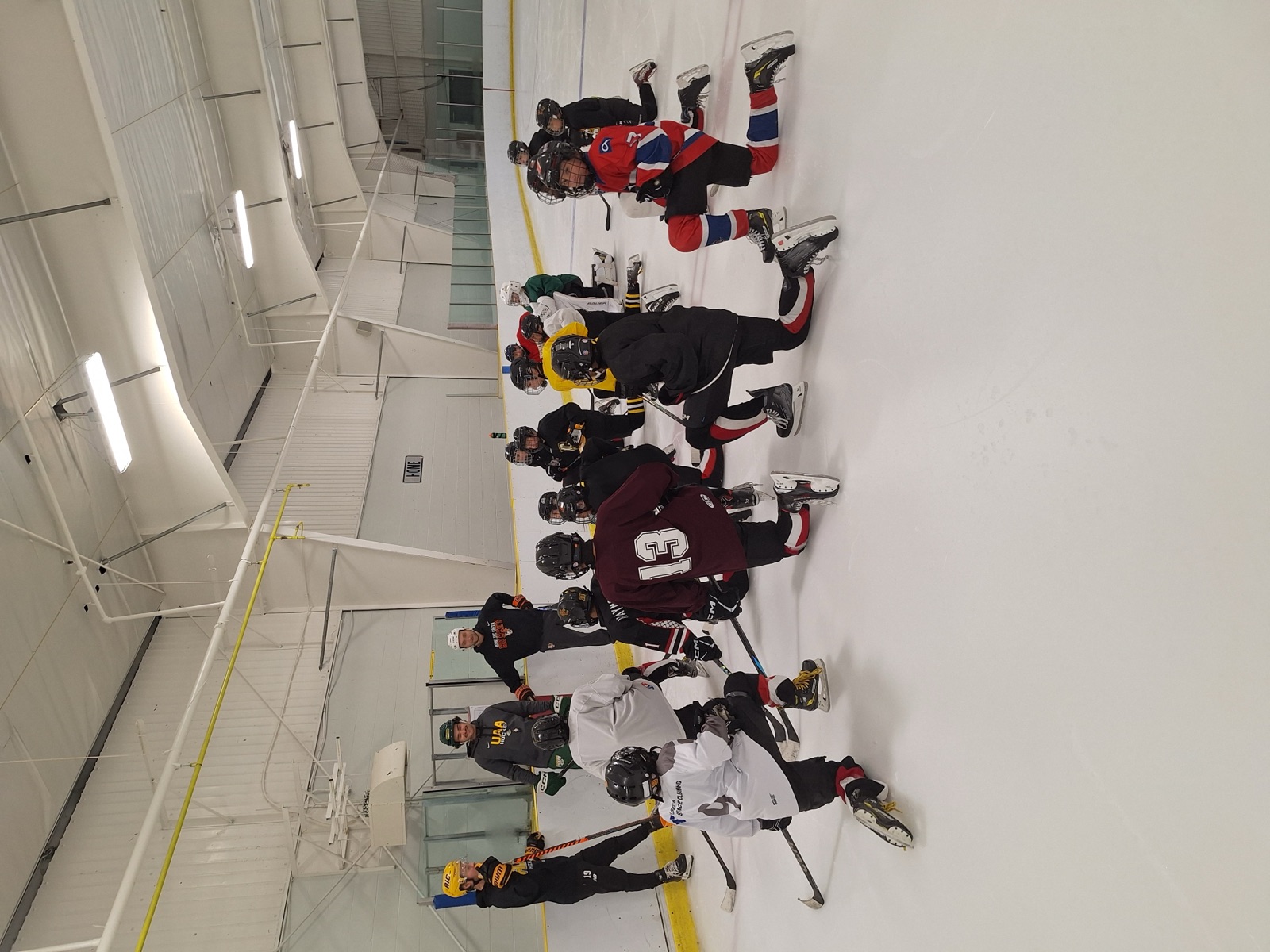

Fun matters at this age, but not for the reason most people think. A kid who's enjoying it holds focus, and a kid who holds focus takes in what's being taught. At seven, eight, and nine, fun is how the development happens.
What actually separates players
- Attention span. The same drill lands completely differently for a kid who's locked in and a kid who's somewhere else mentally.
- Copying a drill properly. Can they take what a coach just demonstrated and reproduce it properly, not roughly? That's what attention span looks like on the ice.
- Wanting the puck. Turnovers at eight usually mean a player is trying something. That's what you want.
I didn't specialize in hockey until I was fifteen. You learn body control, hand-eye, awareness, and better feet from other sports, and it keeps kids fresh.
What to work on
- Small-area games and compete drills over full-ice games
- Another sport, in another season
- The right stick flex, a stick between the chin and nose on skates, and a sensible sharpening
What matters less
- Which team or tier they're on
- Points and lines, which track physical maturity more than skill
- A fixed position, since playing everywhere through twelve teaches more
- Daily ice and year-round hockey-specific training